

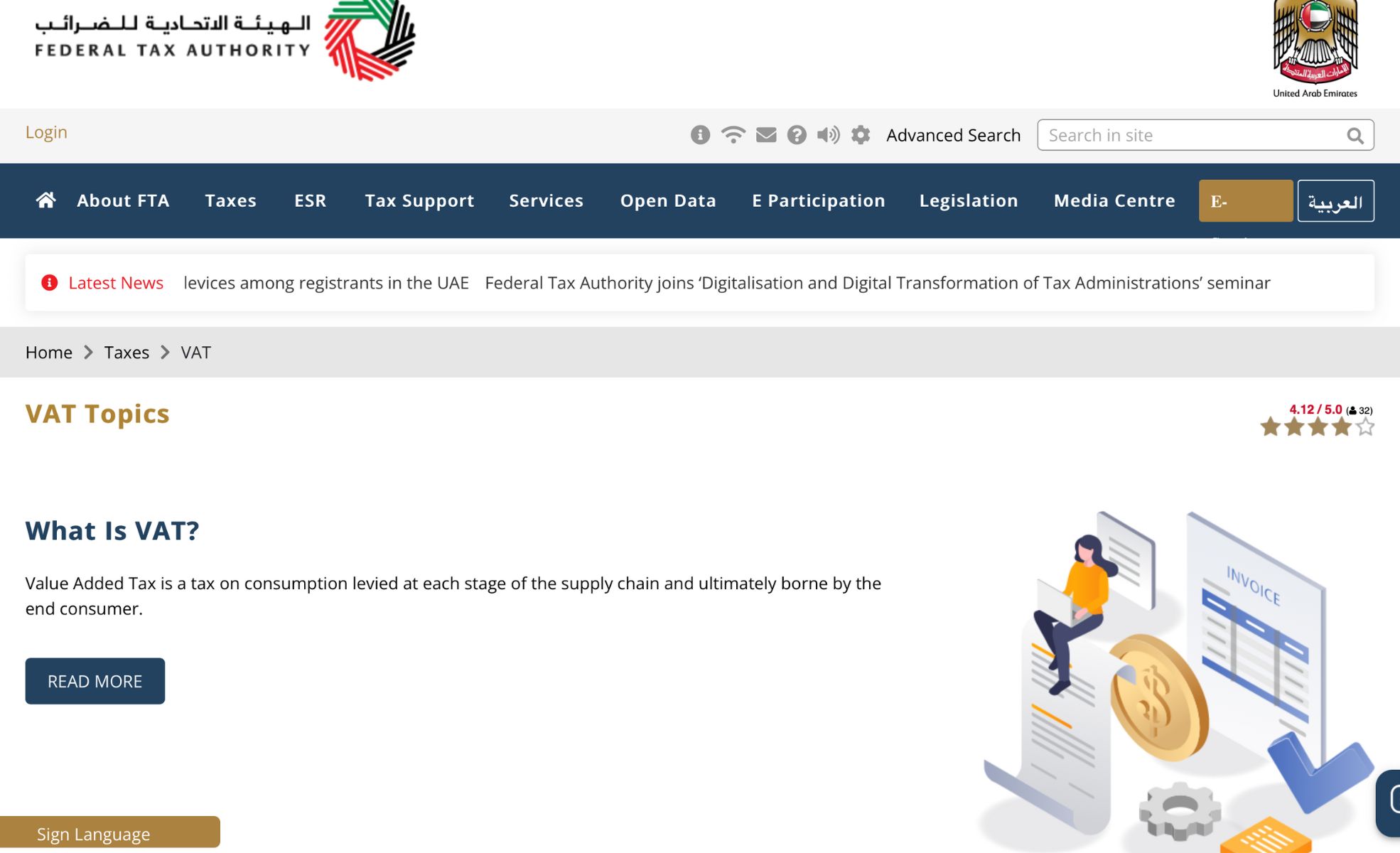
Are you starting a new business in the UAE? You’ll need to get to grips with the VAT (Value Added Tax) registration process. Since January 1, 2018, VAT has been applied at a general rate of 5% to most goods and services in the UAE, affecting every aspect of your business operations. We’re here to walk you through the registration process, exemptions, and the latest 2023 VAT rules in the UAE.
Knowing the VAT rules won’t just ensure your company’s compliance with UAE law. Still, it’ll also provide a clear picture of your business’s financial obligations and how to streamline your operations for maximum profitability. From mandatory to voluntary registration to free zone rules and penalties for non-compliance, you’re about to navigate VAT registration confidently.
Is it mandatory to have a VAT registration in the UAE?
Mandatory VAT registration applies to UAE businesses whose taxable supplies and imports exceed USD 102,110 (AED 375,000) annually. Non-UAE businesses making taxable supplies in the UAE must also register, regardless of the value of the supplies, if there is no other person obligated to pay the due tax on these supplies in the UAE.
Voluntary registration is available for businesses whose supplies and imports exceed USD 51,055 (AED 187,500) annually. This option allows businesses to recover VAT charged by suppliers but also requires them to charge VAT on taxable supplies.
VAT-registered businesses act as tax collectors for the government, with consumers bearing the VAT as an increase of 5% of the cost of taxable goods and services purchased in the UAE. The business remits the collected tax to the government and can claim a refund on tax paid to suppliers. Foreign companies visiting the UAE can also recover incurred VAT.
Certain free zones are designated as such, with special rules applying to supplies made in these zones. However, businesses established in these zones may still need to register for VAT.
Non-compliance with VAT regulations, including failure to register, can incur penalties and fines from the FTA. Therefore, it’s recommended that new companies seek professional advice from a tax expert to ensure compliance with VAT regulations and avoid potential issues or penalties.
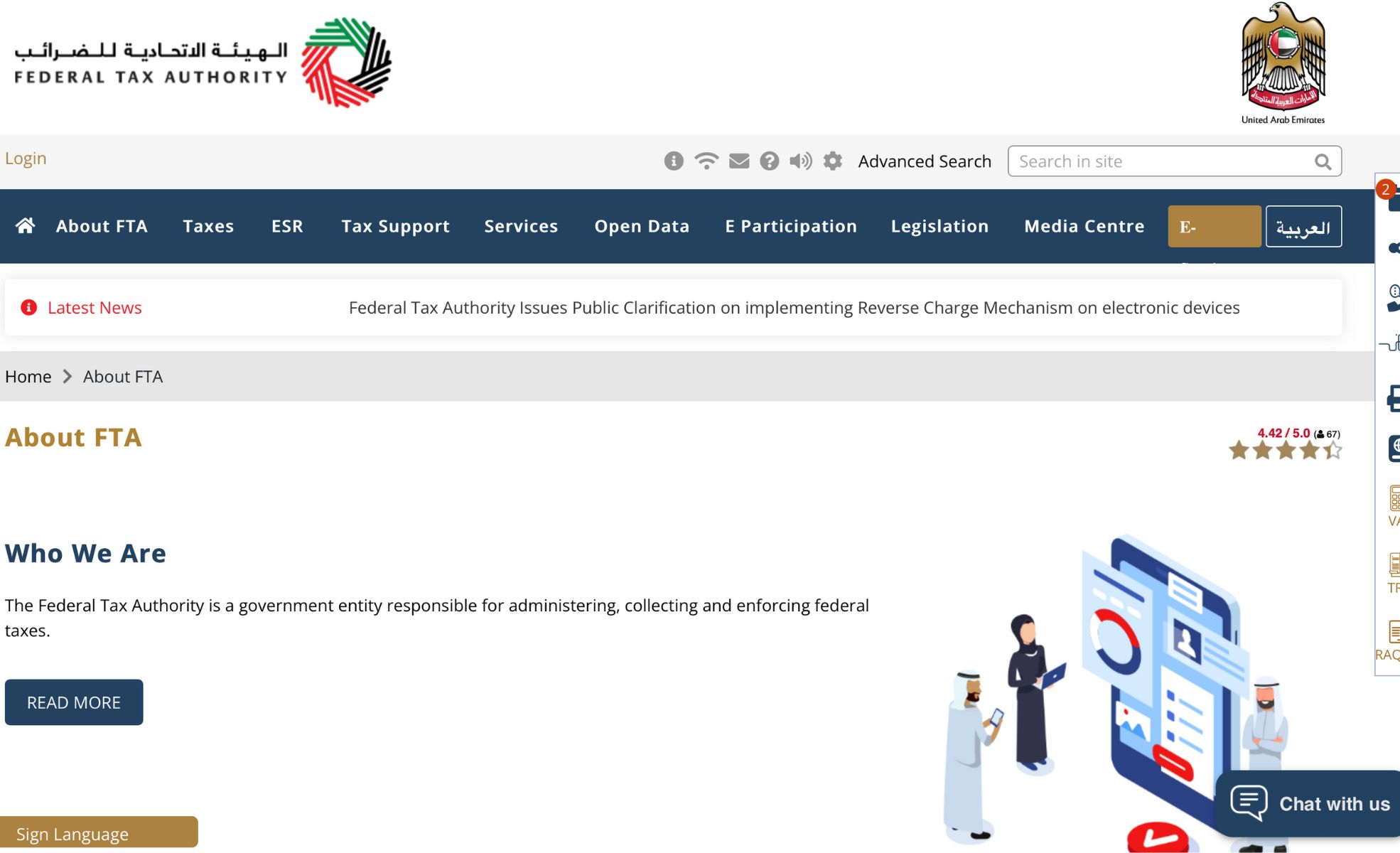
How can I register My New Company For VAT in the UAE?
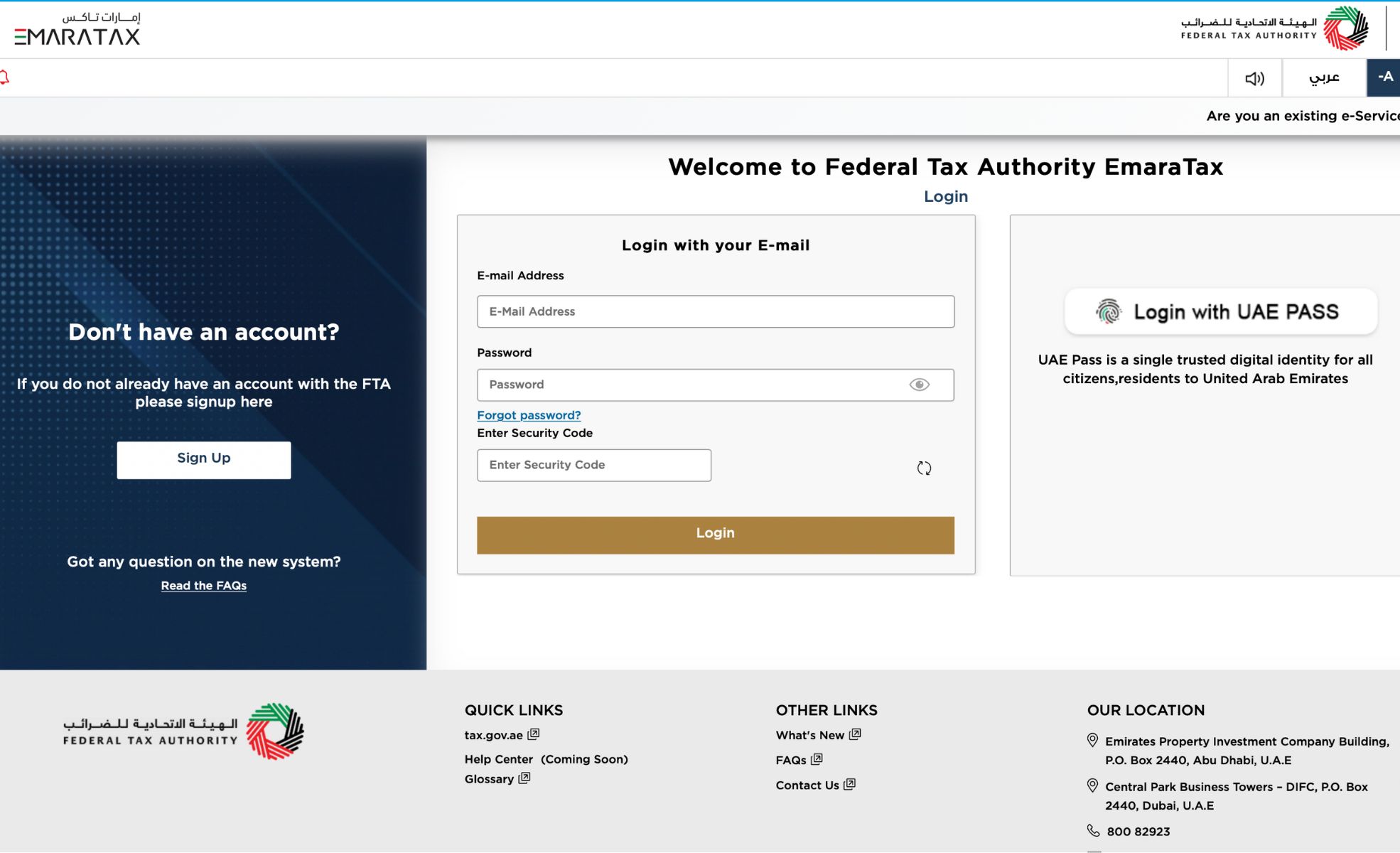
To initiate the VAT registration process, you must establish an e-Services account on the FTA portal. This is a simple procedure akin to creating other online profiles.
After setting up your e-Services account, you can commence the VAT registration. The digital form consists of eight sections, each requiring specific business-related details. You’ll be asked to provide data about the applicant, the applicant’s identification, owner’s details, contact details, and bank account details. It’s crucial to affirm that the information you’ve provided is correct and truthful.
Accuracy is key when completing the form, as your details will be reflected on your registration certificate. For instance, the legal entity and trade names should match those on your trade licence.
You’ll also be required to upload digitised copies of your trade licences and other relevant documents. The accepted file formats for uploading documents are PDF, JPG, PNG, and JPEG, and each file should not exceed 2MB in size.
After completing all sections of the VAT registration form and uploading all necessary documents, you can submit the form for review. The FTA will then assess your application and may request additional information or documents. If your application is approved, the FTA will issue a VAT registration certificate.
Being registered under the VAT law signifies that the government acknowledges your business as a supplier of goods and services. You’re authorised to collect VAT from customers and remit it to the government. Only VAT-registered businesses can charge VAT. It can only be charged on taxable supply of goods and services. You’ll need to claim any input tax credit on VAT paid on your purchases, make payment of VAT to the government, and file periodic VAT returns.
If your business operates via branches in more than one Emirate, a single VAT registration suffices. Similarly, related or associated parties in businesses can apply for VAT group registration.
Non-compliance with VAT regulations, including failure to register, can result in penalties and fines. Therefore, it’s crucial to understand your VAT obligations and seek professional advice if necessary.
Who is exempted from VAT in UAE?
While the majority of goods and services are subject to the 5% VAT, there are exceptions. Certain items are either exempt or taxed at a 0% rate, provided specific conditions are fulfilled.
The 0% VAT rate is applicable to goods and services exported outside the VAT-implementing GCC (Gulf Cooperation Council) member states, international transportation, the supply of crude oil and natural gas, some residential real estate, and certain specific areas such as healthcare and education.
For instance, if your presence in the UAE is short-term (less than a month) and not effectively connected with the supply, you’ll fall under the zero-rating export of services.
Conversely, VAT exemptions are applicable to certain financial services, the subsequent supply of residential real estate, transactions in bare land, and domestic passenger transport. Some transactions in goods between companies established in UAE Designated (Free) Zones (DZs) may also be exempt. However, the supply of services within DZs is subject to VAT in accordance with the general application of the UAE VAT legislation.
Certain sectors are exempt from VAT registration, including financial services, residential buildings (excluding specifically zero-rated ones), bare land, and local passenger transport. These sectors aren’t subject to additional taxation and don’t require VAT registration or filing tax returns.
Infringements of VAT regulations can lead to penalties ranging from USD 136 (AED 500) to USD 13,615 (AED 50,000). Hence, it’s advisable for new companies to engage a VAT consultant or legal firm to navigate the complexities of VAT registration and ensure adherence to the law.
What are the new VAT rules in UAE 2023?
Staying updated with the latest VAT rules is crucial for new businesses in the UAE. In 2023, the UAE government implemented new VAT rules to ensure businesses meet taxation requirements and avoid penalties. These changes affect the UAE VAT Decree-Law and impact businesses across the country.
The 2023 VAT rules were introduced in three phases: January, February, and March.
In January, exceptions from VAT registration were introduced for registered individuals whose supplies are zero-rated or who don’t make any supplies other than zero-rated supplies. Additionally, taxable individuals can recover VAT paid or declared on the import of goods or services incurred before registration, subject to certain requirements.
In February, a new reporting requirement was introduced for UAE resident taxpayers who sell taxable goods online and have annual sales of more than USD 2,722,600 (AED 100 million). These companies now need to identify the specific Emirate where their services are used and report their sales in their VAT returns on an emirate-by-emirate basis.
From March 1, 2023, any VAT return errors must be voluntarily disclosed to the FTA. Before this, only errors that exceeded USD 2,723 (AED 10,000) were subject to voluntary disclosure. Fixed fines of USD 272 (AED 1,000) for the initial disclosure and USD 545 (AED 2,000) for subsequent disclosures have been introduced for such errors.
In March, the UAE also issued guidance on VAT input apportionment, providing information on the general input tax apportionment rules and the available special methods of input tax apportionment.
Other key points from the new VAT rules in 2023 include:
- Extended time for a tax audit.
- Tax audit after voluntary disclosure.
- Consequences for tax evasion.
- Failure to obtain VAT registration.
- Exemptions for 100% exporters.
- Additional compliance for input credit on import of service.
- Changes in the construction sector and retention payments.
The recent changes to the UAE VAT Decree-Law reflect the global trend of adapting tax laws to suit changing economic conditions. As a business owner, you’ll need to evaluate the impact of the amendments and make any necessary adjustments to ensure compliance.
Registered companies are required to issue tax invoices to their customers. If you’re a registered business, you can claim input tax credits on their eligible expenses and purchases, which can be offset against the VAT liability. Companies are required to submit regular VAT returns to the FTA, reporting their taxable supplies, input tax, and output tax.
If you don’t comply with the VAT regulations, you will incur penalties and fines imposed by the FTA. Therefore, new companies in the UAE need to ensure their compliance with the VAT laws to avoid any legal issues or financial penalties.
Ensuring VAT Compliance: A Key Pillar for New UAE Businesses
When you’re setting up a new business in the UAE, complying with VAT regulations is a crucial step. This includes everything from registration procedures to understanding exemptions and keeping up with the latest changes in the VAT law.
Remember, any slip-ups or non-compliance can result in hefty penalties. That’s why it’s not just recommended but necessary to seek professional guidance.
Being VAT compliant is more than staying on the right side of the law. It also gives your business credibility in the market. So, keep this guide close, feel free to consult with experts if you need clarification, and make sure your business stays in step with the UAE’s ever-changing economic landscape.